
Introduction: Understanding the Importance of Effluent Treatment Plants
Industrial activities generate wastewater that can contain a wide range of pollutants depending on the manufacturing process, raw materials and production operations. Unlike domestic wastewater, industrial effluent may contain chemicals, dissolved substances, suspended solids, organic pollutants and other contaminants that require proper treatment before discharge or reuse.
This is where an Effluent Treatment Plant (ETP) plays an important role in industrial wastewater management. An ETP is a specially designed wastewater treatment system that helps industries reduce pollutants and manage their effluent through a combination of physical, chemical and biological treatment processes.
For industries looking for ETP in Baddi, understanding the purpose and working of an Effluent Treatment Plant is an important step before selecting a suitable wastewater treatment approach. Baddi, Himachal Pradesh is an important industrial location where different industries generate wastewater with different treatment requirements.
Since every industrial process produces wastewater with different characteristics, an ETP cannot be designed using a single standard approach. The treatment process depends on factors such as wastewater quality, flow rate, industry type, reuse requirements and the desired treatment outcome.
Shreya Environmental Consultancy Services supports industrial wastewater treatment requirements in Baddi, Himachal Pradesh and suitable projects across India by developing solutions according to specific wastewater and operational needs.
What Is an Effluent Treatment Plant (ETP)?
An Effluent Treatment Plant (ETP) is a wastewater treatment system designed to treat industrial effluent generated from manufacturing and processing activities. The main objective of an ETP is to remove or reduce pollutants present in wastewater so that the treated water can meet the required quality standards for discharge or reuse.
Industrial wastewater can come from different sources, including production processes, equipment cleaning, chemical processing, utilities and other industrial activities. The characteristics of this wastewater depend on the nature of the industry and the materials used during production.
For example, wastewater generated from a pharmaceutical facility may have different characteristics compared to wastewater from a chemical, textile or food-processing industry. Because of this variation, ETP design requires proper wastewater assessment before selecting treatment technologies.
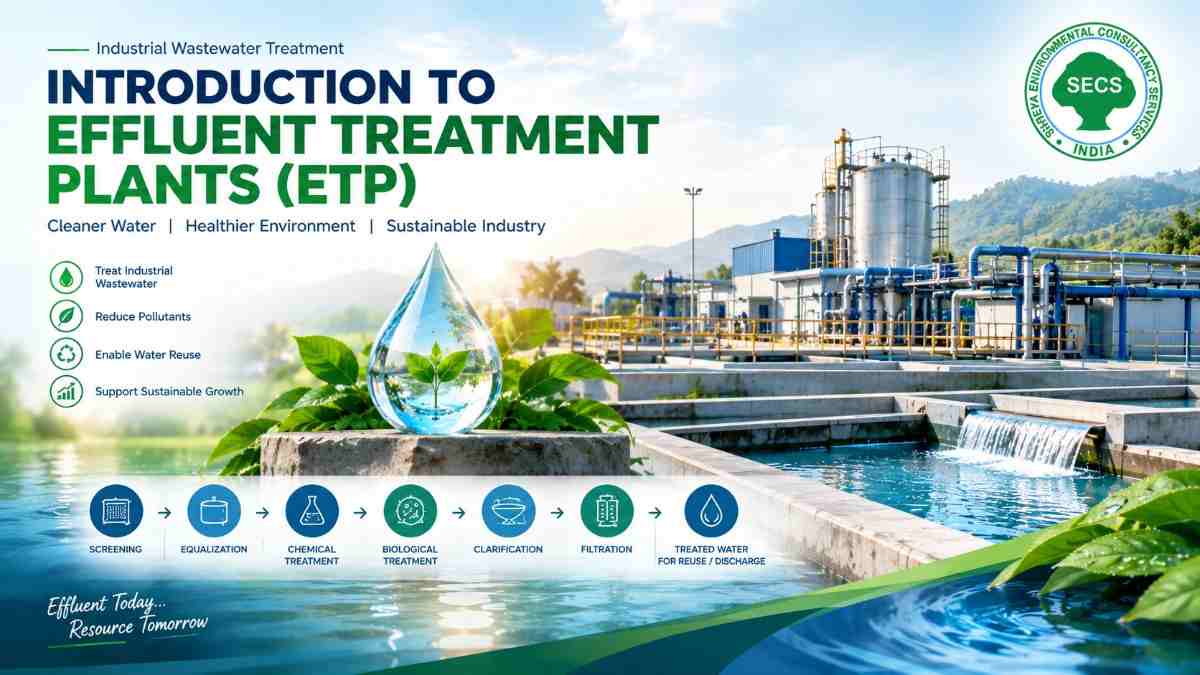
A typical Effluent Treatment Plant (ETP) may include different treatment stages such as screening, equalization, chemical treatment, biological treatment, clarification, filtration and advanced treatment processes depending on the project requirements.
Why Do Industries Need an ETP System?
Industrial wastewater management is an important part of responsible industrial operations. If wastewater is not treated properly, pollutants present in the effluent may affect surrounding water resources, soil quality and the environment.
An ETP system helps industries create a controlled process for treating wastewater before it reaches the next stage of management. The requirement of an ETP depends on the type of industry, wastewater characteristics and the intended use of treated water.
Industries generally consider ETP systems for:
- Managing wastewater generated during manufacturing activities
- Reducing pollutants present in industrial effluent
- Improving wastewater quality before discharge or reuse
- Supporting water recovery and reuse opportunities
- Creating a systematic wastewater treatment process
- Managing industry-specific wastewater challenges
In industrial areas like Baddi, where different manufacturing sectors operate, wastewater characteristics can vary significantly between facilities. Therefore, an effective wastewater treatment strategy should always begin with understanding the actual wastewater generated by the industry.
Depending on the wastewater profile and treatment objectives, an ETP system may also be integrated with advanced solutions such as reverse osmosis (RO) or Zero Liquid Discharge (ZLD) systems where required.
How Does an Effluent Treatment Plant Work?
The working process of an ETP involves multiple treatment stages, where each stage performs a specific function to remove different types of contaminants from industrial wastewater.
The exact treatment sequence depends on the wastewater characteristics, but most industrial ETP systems follow a combination of physical, chemical and biological treatment methods.
Wastewater Collection and Screening
The first stage of an ETP involves collecting wastewater generated from different industrial processes and transferring it to the treatment system.
Before entering further treatment stages, wastewater generally passes through screening units that help remove larger physical impurities and unwanted materials.
This initial step helps protect pumps, pipelines and other treatment equipment while improving the efficiency of the overall treatment process.
Equalization Process
Industrial wastewater quality and quantity can change depending on production schedules, raw materials and operating conditions. The equalization process helps balance these variations before wastewater enters further treatment stages.
An equalization tank allows wastewater from different sources to mix properly, creating a more stable feed for the treatment system.
This helps improve process control and supports more consistent treatment performance.
Primary Chemical Treatment
Many industrial wastewater streams contain suspended particles, colour, metals or other contaminants that require chemical treatment for effective removal.
Chemical treatment processes such as pH adjustment, coagulation and flocculation may be used depending on wastewater characteristics.
These processes help convert smaller particles into larger flocs, making them easier to separate during clarification.
Primary Clarification
After chemical treatment, clarification allows heavier particles and formed sludge to settle. The separated sludge is collected for further handling, while clarified wastewater moves towards the next treatment stage.
Proper clarification helps reduce suspended solids and prepares wastewater for biological treatment where required.
Biological Treatment Process
Biological treatment is an important stage in many Effluent Treatment Plants where biodegradable organic pollutants need to be reduced. This process uses microorganisms that help break down organic matter present in industrial wastewater.
Depending on wastewater characteristics and treatment objectives, different biological treatment methods can be considered. Aerobic treatment uses microorganisms that require oxygen, while anaerobic treatment works without oxygen and can be suitable for specific wastewater conditions.
The efficiency of biological treatment depends on several factors, including wastewater composition, organic load, oxygen availability, nutrient balance and proper operation of the treatment system.
Secondary Clarification and Filtration
After biological treatment, the wastewater generally moves towards clarification where biological sludge is separated from the treated water.
This separation helps improve the quality of treated water before it enters further treatment stages. Depending on the required output quality, additional filtration processes may be included.
Filtration systems such as sand filters, activated carbon filters or other polishing systems may be used to remove remaining suspended particles and improve treated water quality.
Advanced Treatment and Water Recovery
Some industries require additional treatment because of high dissolved solids, specific contaminants or water reuse requirements. In such cases, advanced treatment technologies can become part of the overall wastewater management strategy.
Technologies such as membrane filtration, reverse osmosis (RO) and other recovery processes may be integrated depending on wastewater characteristics and project objectives.
For industries focusing on maximum water recovery and reduced liquid discharge, advanced systems such as Zero Liquid Discharge (ZLD) can be considered where technically and economically suitable.
Different Treatment Processes Used in an ETP
An Effluent Treatment Plant combines different treatment processes to achieve the required wastewater quality. The selection of treatment methods depends on the type of industry, pollutants present in wastewater and the final treatment objective.
Physical Treatment Process
Physical treatment focuses on removing contaminants through physical separation methods. These processes are generally used in the initial stages of wastewater treatment.
Common physical treatment methods include screening, sedimentation and filtration. These processes help remove larger particles and suspended solids while preparing wastewater for further treatment.
Chemical Treatment Process
Chemical treatment is used when wastewater contains pollutants that require chemical reactions for effective removal.
Processes such as neutralization, coagulation and flocculation help manage pH levels, reduce suspended solids and improve separation of contaminants.
The chemical treatment approach depends on wastewater testing and the specific pollutants present in the industrial effluent.
Biological Treatment Process
Biological treatment uses microorganisms to reduce biodegradable organic matter present in wastewater.
This treatment method is commonly used where reduction of parameters such as Biological Oxygen Demand (BOD) and Chemical Oxygen Demand (COD) is required.
Proper biological treatment requires suitable operating conditions, regular monitoring and an understanding of wastewater characteristics.
Advanced Treatment Technologies
Some industrial wastewater streams require additional treatment beyond conventional ETP processes. Advanced technologies may be considered where industries need improved water quality, higher recovery or better management of difficult wastewater streams.
Depending on the project requirements, advanced systems may include RO treatment, membrane technologies or integration with ZLD systems.
The correct technology selection should always be based on wastewater analysis, operating conditions and long-term treatment goals rather than selecting equipment without proper evaluation.
Industries Where Effluent Treatment Plants Are Commonly Used
Different industries generate different types of wastewater, and each wastewater stream requires a treatment approach based on its characteristics.
Pharmaceutical Industries
Pharmaceutical manufacturing processes can generate wastewater from production activities, equipment cleaning and utility operations.
The wastewater characteristics may vary depending on the products manufactured and the processes involved. Therefore, pharmaceutical wastewater treatment generally requires careful assessment before designing an ETP system.
Chemical Industries
Chemical industries may generate wastewater containing complex compounds, dissolved solids and process-related contaminants.
Such wastewater streams may require a combination of physical, chemical and advanced treatment processes depending on the nature of contaminants present.
Food Processing Industries
Food processing wastewater can contain organic matter, suspended solids, oils and grease depending on the production process.
A suitable ETP system helps manage these wastewater characteristics through appropriate treatment stages designed according to the facility requirements.
Textile and Manufacturing Industries
Textile and other manufacturing industries may generate wastewater containing colour, chemicals and process-related pollutants.
The treatment process depends on the type of manufacturing activity, wastewater quality and required treatment outcome.
Important Factors Before Designing an ETP Plant
A successful ETP in Baddi or any other industrial location begins with understanding the wastewater before selecting the treatment process.
Several factors need to be considered during ETP planning:
- Wastewater Flow: The quantity of wastewater generated daily and variations in flow affect plant capacity and design.
- Wastewater Characteristics: Parameters such as pH, BOD, COD, TSS, TDS and industry-specific pollutants help determine suitable treatment methods.
- Industry Process: Manufacturing activities directly influence the type and concentration of contaminants present in wastewater.
- Treated Water Requirement: The intended use of treated water affects the level of treatment required.
- Future Expansion: Future production changes should be considered to avoid limitations in plant capacity.
This is why ETP design is not only about installing treatment equipment. It requires understanding the complete wastewater generation process and developing a solution suitable for the industry's long-term requirements.
ETP and Water Reuse: Moving Towards Better Water Management
Modern wastewater management is increasingly focused on recovering and reusing water wherever technically possible.
An effectively designed ETP can become an important part of an industry's water management strategy by improving treated water quality and creating opportunities for reuse.
Depending on quality requirements, treated wastewater may be further processed through advanced systems such as RO systems for applications requiring higher water quality.
Industries dealing with complex wastewater streams may also explore advanced recovery solutions such as ZLD in Baddi for reducing liquid discharge and improving water recovery.
Difference Between ETP and STP
ETP and STP are both wastewater treatment systems, but they are designed for different wastewater sources.
An Effluent Treatment Plant (ETP) is designed for industrial wastewater generated from manufacturing and processing activities. Industrial effluent may contain chemicals, dissolved solids and industry-specific pollutants.
A Sewage Treatment Plant (STP) is designed for domestic wastewater generated from residential areas, offices, commercial buildings and similar sources.
Understanding the difference between ETP and STP helps industries and organizations select the appropriate wastewater treatment solution according to their requirements.
You can explore more about Sewage Treatment Plant (STP) solutions for domestic wastewater treatment requirements.
ETP in Baddi: Importance of Industrial Wastewater Treatment
Baddi, Himachal Pradesh is an important industrial region where businesses from different sectors operate with different wastewater generation patterns.
Since every industry produces wastewater with different characteristics, industries searching for ETP in Baddi require treatment solutions that are designed according to their specific processes and wastewater quality.
A properly planned ETP system helps industries manage wastewater through a structured treatment process rather than depending on a standard approach that may not match their actual requirements.
Shreya Environmental Consultancy Services focuses on industrial wastewater treatment requirements in Baddi, Himachal Pradesh while also supporting suitable wastewater and environmental projects across India.
Common Challenges in ETP Operation
Installing an Effluent Treatment Plant is only the first step towards effective wastewater management. The long-term performance of an ETP depends on proper operation, monitoring and maintenance.
Several factors can affect ETP performance if they are not managed properly. These challenges may include changes in wastewater characteristics, inconsistent operation, improper chemical dosing, inadequate maintenance and variations in industrial production.
Some common challenges faced during ETP operation include:
- Variation in wastewater quality due to changes in production processes
- Fluctuations in wastewater flow and pollutant load
- Maintaining proper biological treatment conditions
- Managing sludge generation and disposal
- Ensuring consistent treatment efficiency
- Regular monitoring of important wastewater parameters
These challenges highlight why an ETP should be considered as a complete treatment system rather than only a collection of equipment. Proper design, operation and monitoring are essential for achieving reliable performance.
Importance of ETP Operation and Maintenance
Regular operation and maintenance play an important role in maintaining the efficiency of an Effluent Treatment Plant.
An ETP requires continuous monitoring of treatment parameters, equipment condition, chemical requirements and process performance. Small operational issues, if ignored, can affect the overall treatment quality and increase maintenance requirements.
Proper ETP maintenance may include:
- Regular inspection of pumps, blowers and mechanical equipment
- Monitoring wastewater quality parameters
- Maintaining biological treatment conditions
- Managing sludge handling systems
- Cleaning and maintaining filtration systems
- Optimizing chemical usage according to wastewater conditions
For industries that want consistent wastewater treatment performance, professional operation and maintenance support can help in managing day-to-day treatment requirements effectively.
How Shreya Environmental Consultancy Services Can Support Your ETP Project
Planning an Effluent Treatment Plant requires more than selecting treatment equipment. A successful ETP project depends on understanding wastewater characteristics, evaluating treatment requirements and developing a system that matches the industry's operational needs.
Shreya Environmental Consultancy Services supports industries with wastewater treatment and environmental solutions based on project-specific requirements. With a focus on industrial wastewater management, Shreya works with industries in Baddi, Himachal Pradesh and suitable projects across India.
With 20+ years of experience in environmental and wastewater-related projects, Shreya helps industries evaluate their treatment requirements and develop suitable approaches for wastewater management.
Our Approach Towards ETP Projects
- Wastewater Assessment: Understanding wastewater sources, flow quantity and important characteristics before selecting the treatment approach.
- ETP Planning and Design Support: Developing treatment strategies based on industry type, wastewater quality and operational requirements.
- ETP Integration With Other Systems: Evaluating how ETP can work together with solutions such as RO systems, water treatment systems and advanced wastewater recovery technologies.
- Environmental Consultancy: Supporting industries with broader environmental planning and wastewater management requirements through environmental consultancy services.
- Turnkey Project Execution: Supporting suitable projects through planning, implementation and commissioning requirements with a complete project approach.
- Operation and Maintenance Support: Helping industries maintain treatment performance through proper monitoring and operational practices.
Along with ETP solutions, industries may require additional wastewater systems depending on their requirements. These may include Water Treatment Plants (WTP), Sewage Treatment Plants (STP), RO systems, ZLD solutions and complete wastewater management approaches.
Whether your facility is located in Baddi, Himachal Pradesh or another industrial region of India, the right ETP solution should be developed around wastewater quality, production requirements, treatment objectives and long-term operational needs.
Frequently Asked Questions About Effluent Treatment Plants
What is an Effluent Treatment Plant (ETP)?
An Effluent Treatment Plant (ETP) is a wastewater treatment system designed to treat industrial effluent generated from manufacturing and processing activities. It uses physical, chemical and biological treatment processes to reduce pollutants and improve wastewater quality before discharge or reuse.
Why is ETP required for industries?
Industries require ETP systems to manage wastewater generated during production activities. An appropriately designed ETP helps reduce pollutants, improve wastewater quality and support responsible industrial wastewater management.
How does an ETP plant work?
An ETP generally works through multiple treatment stages including screening, equalization, chemical treatment, biological treatment, clarification, filtration and advanced treatment processes depending on wastewater requirements.
Is ETP required for every industry?
The requirement of an ETP depends on the type of industry, wastewater generation, pollutants present in the effluent and applicable wastewater management requirements. Industries generating industrial wastewater generally need an appropriate treatment system based on their wastewater characteristics.
What is the difference between ETP and STP?
ETP is designed for industrial wastewater generated from manufacturing processes, while STP is designed for domestic sewage generated from residential, commercial or institutional sources.
Can treated water from an ETP be reused?
Depending on the treatment quality and application requirements, treated water from an ETP may be suitable for reuse after additional treatment processes. The possibility of reuse depends on water quality requirements and the intended industrial application.
What factors affect ETP design?
ETP design depends on factors such as wastewater quantity, wastewater characteristics, industry type, treatment objectives, available space, future expansion plans and water reuse requirements.
Can an existing ETP be upgraded?
Yes, existing ETP systems can be evaluated for upgradation depending on their current performance, capacity, wastewater characteristics and future treatment requirements.
Does Shreya provide ETP solutions only in Baddi?
No. While Baddi, Himachal Pradesh is an important industrial focus area, Shreya Environmental Consultancy Services supports suitable wastewater treatment and environmental projects across India based on individual project requirements.
Conclusion
An Effluent Treatment Plant is an important part of industrial wastewater management, helping industries treat wastewater generated from manufacturing and processing activities through a planned treatment approach.
The effectiveness of an ETP in Baddi or any other industrial location depends on proper wastewater analysis, suitable technology selection, correct system design and regular operation and maintenance.
Industries should evaluate their wastewater characteristics and treatment objectives before selecting an ETP solution because every industrial wastewater stream has different requirements.
With increasing focus on responsible water management, industries are also exploring integrated solutions that combine ETP systems with water recovery, RO, ZLD and other wastewater treatment technologies.
Shreya Environmental Consultancy Services supports industries with wastewater treatment and environmental solutions, helping businesses evaluate and develop suitable approaches for their wastewater management needs in Baddi, Himachal Pradesh and across India.
Planning an ETP project or looking to improve your existing wastewater treatment system? Connect with Shreya Environmental Consultancy Services to discuss your industrial wastewater requirements and explore a suitable treatment approach.