
Effluent Treatment Plant (ETP) Solutions in Baddi & Across India
Customized Effluent Treatment Plant (ETP) solutions for industrial wastewater, with project support from wastewater assessment and process design to installation, commissioning, and ongoing operation and maintenance.
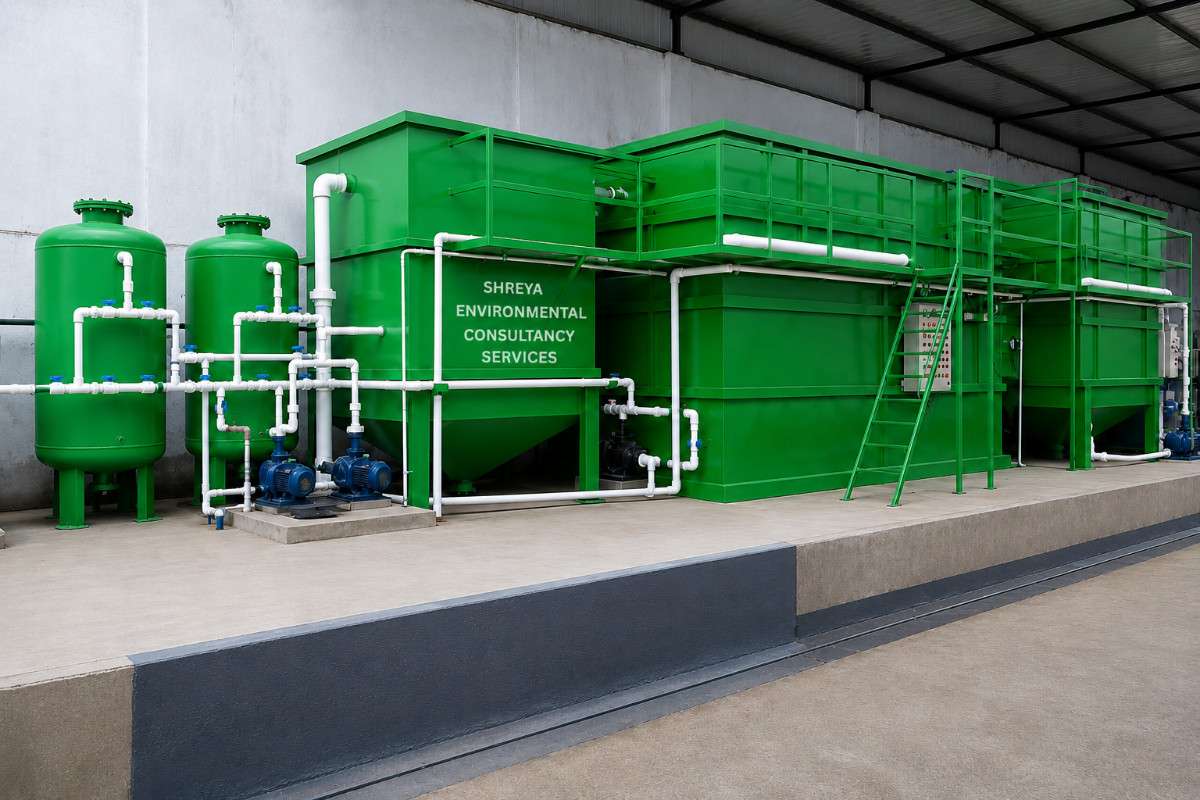
Efficient Effluent Treatment Plant Solutions for Industrial Wastewater Management
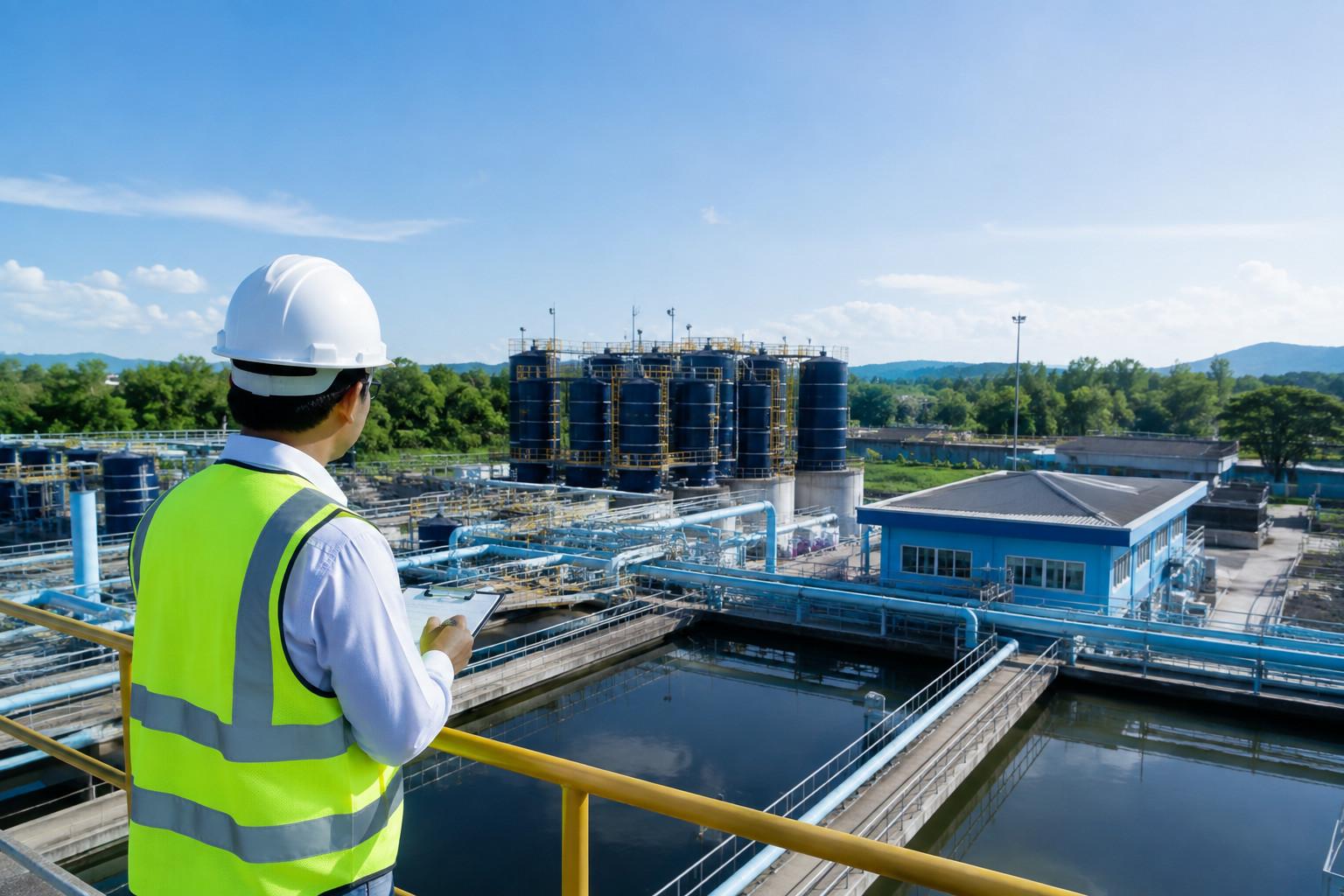
Industrial processes generate wastewater containing different contaminants that require proper treatment before discharge or reuse. An Effluent Treatment Plant (ETP) is an engineered solution designed to treat industrial effluent, improve water quality, and support environmental compliance.
Since every industry has different wastewater characteristics, ETP systems are designed according to specific operational requirements. A properly planned treatment system helps industries manage wastewater efficiently and maintain responsible operations.
At Shreya Environmental Consultancy Services (SECS), we provide customized ETP solutions with complete engineering support, helping industries achieve reliable performance, sustainable wastewater management, and long-term operational efficiency.
What is an Effluent Treatment Plant (ETP)?
An Effluent Treatment Plant (ETP) is a specialized wastewater treatment system designed to manage industrial effluent generated from different manufacturing and processing activities. It helps remove unwanted contaminants from wastewater and improve its quality before discharge or reuse.
Industrial wastewater can contain various pollutants that differ based on the type of process, materials used, and production activities. An ETP helps industries manage these wastewater challenges through a structured treatment approach based on specific effluent characteristics and required treatment quality.
The design and capacity of an ETP depend on factors such as wastewater composition, flow quantity, applicable environmental requirements, and the intended use of treated water. A properly planned ETP system supports effective wastewater management while helping industries maintain responsible and sustainable operations.
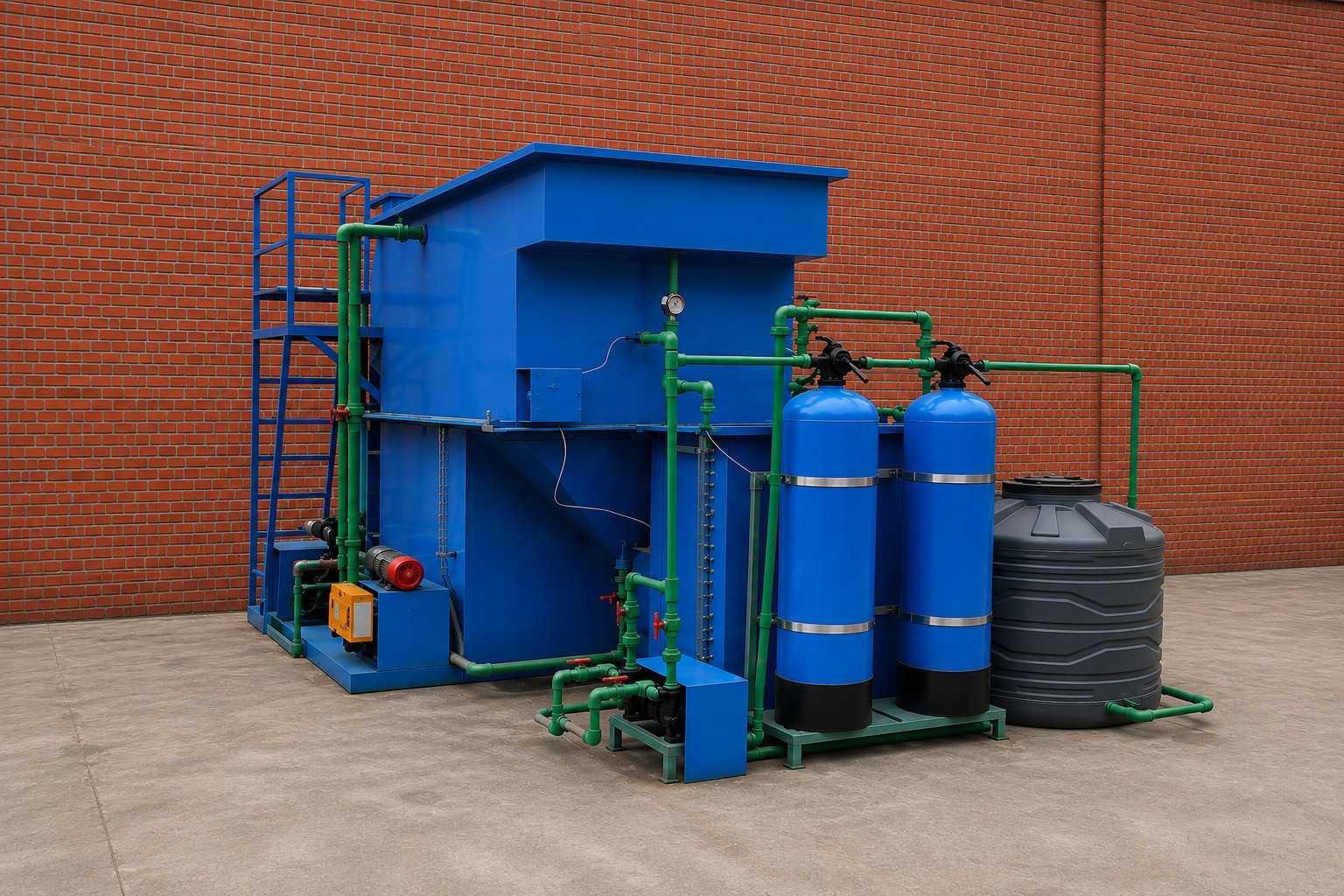
ETP Treatment Process
An ETP treatment sequence may include preliminary treatment, equalization, pH adjustment, primary clarification, biological treatment, secondary clarification, filtration, and treated-water reuse or discharge, depending on wastewater characteristics and treatment requirements.
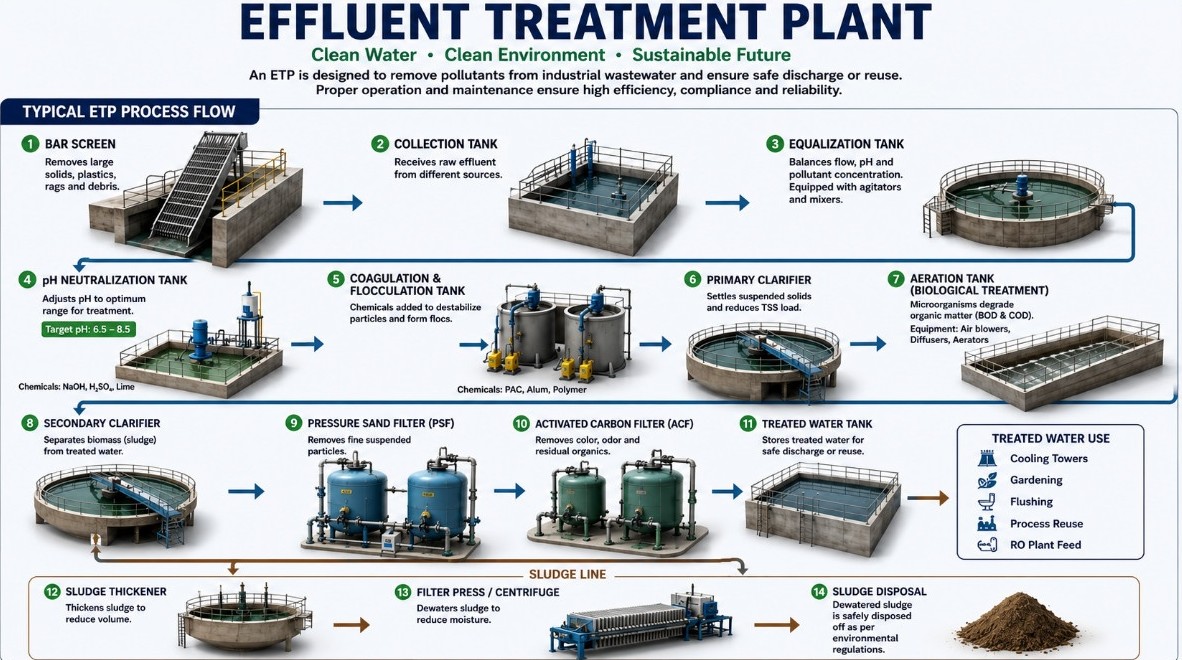
ETP Treatment Flowchart
Explore the complete ETP treatment process from inlet through primary treatment, biological treatment, filtration, and treated water reuse or safe discharge.
Bar Screen
Removes larger floating materials and debris to help protect downstream treatment equipment.
Grit Chamber
Helps remove heavier inorganic particles such as sand and grit to reduce sediment accumulation and equipment wear.
Oil & Grease Trap
Separates free-floating oil, grease, fats, and other light contaminants from wastewater where required.
Effluent Collection / Equalization Tank
Collects wastewater and helps regulate variations in flow and pollutant concentration for more stable downstream treatment.
Neutralization Tank
Adjusts wastewater pH using suitable treatment chemicals to create appropriate conditions for subsequent treatment processes.
Primary Clarifier
Helps separate settleable suspended solids and associated organic matter through sedimentation.
Biological Treatment & Aeration
Uses biological treatment processes such as MBBR, SBR, MBR, or activated sludge systems to reduce biodegradable organic pollutants.
Secondary Clarifier
Separates biological solids from treated wastewater following biological treatment, with sludge handling based on the selected process configuration.
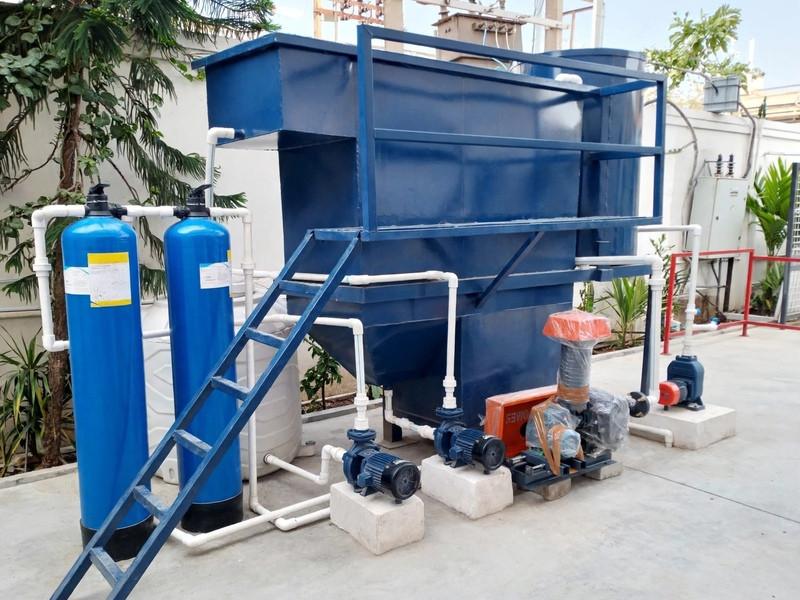
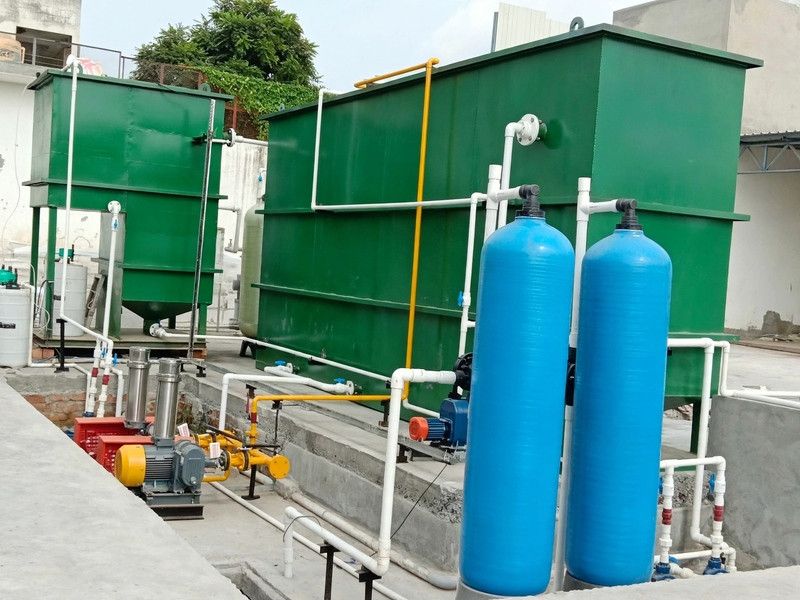
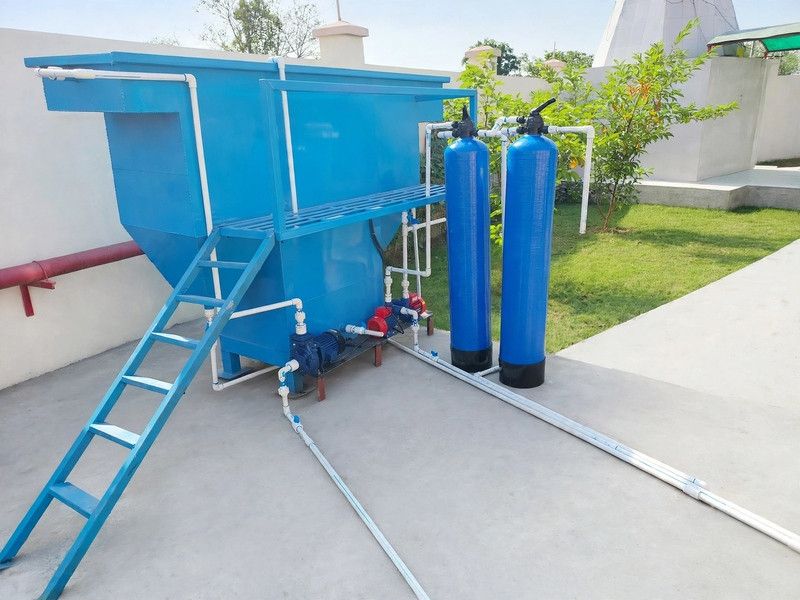
Pressure Sand Filter
Helps remove remaining suspended particles and fine solids to improve treated-water clarity.
Activated Carbon Filter
Helps reduce residual color, odor, organic compounds, and certain impurities through adsorption.
Treated Water Storage
Stores treated water for controlled reuse, further treatment, or discharge according to the project's requirements.
Water Reuse / Discharge
Treated effluent may be reused for suitable applications or discharged in accordance with applicable requirements and the project's treatment objectives.
Applications of Treated Water
Treated water from an ETP can be reused for various industrial and non-potable applications, helping industries reduce freshwater consumption and promote sustainable water management.
Industrial Process Reuse
Reused in suitable manufacturing processes to reduce freshwater consumption and improve water efficiency.
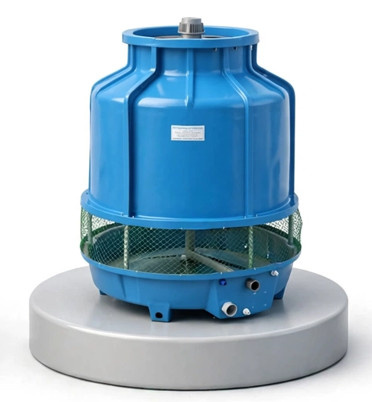
Cooling Tower Applications
Used as makeup water for cooling towers after achieving required treatment quality.

Industrial Cleaning
Suitable for cleaning equipment, machinery, floors, and other industrial housekeeping activities.
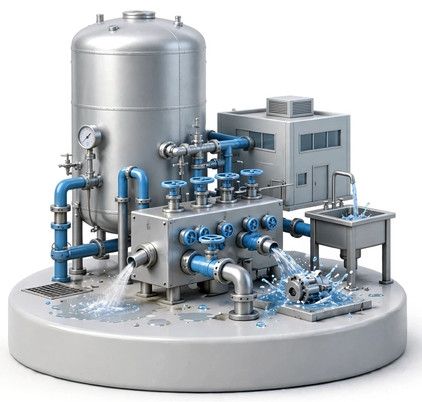
Utility Water Requirements
Supports various non-potable industrial utility applications where fresh water is not required.
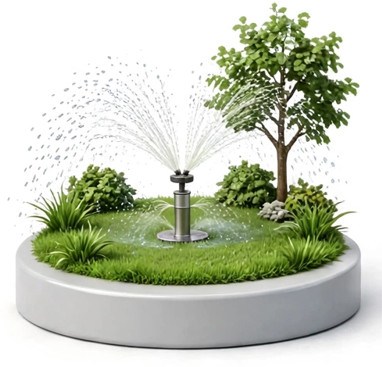
Gardening & Greenbelt Development
Used for plantation, landscaping, and maintaining green areas within industrial premises.
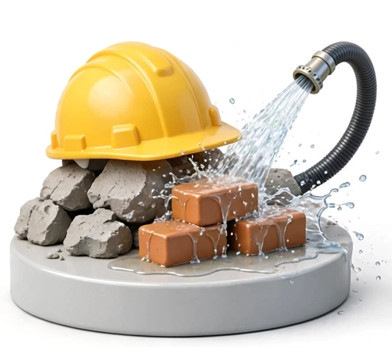
Construction Activities
Suitable for concrete curing, dust suppression, and other construction-related activities.
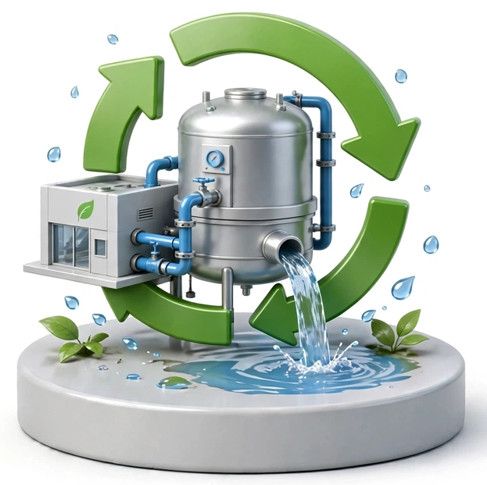
Water Recycling
Helps industries recycle treated wastewater and reduce overall freshwater dependency.
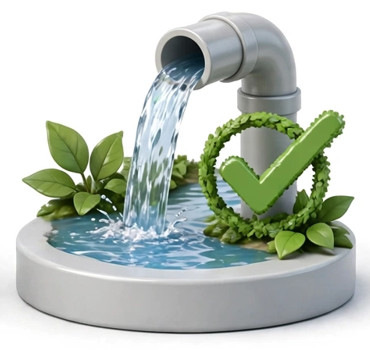
Safe Discharge
Ensures treated effluent meets environmental standards before final discharge.
ETP Technologies
We provide advanced treatment technologies selected according to wastewater characteristics, treatment requirements, and operational needs.
MBBR Technology
Moving Bed Biofilm Reactor (MBBR) is an efficient biological treatment technology that uses specially designed media to support microbial growth and improve wastewater treatment performance.
SBR Technology
Sequencing Batch Reactor (SBR) is an automated biological treatment process that combines multiple treatment stages within a single reactor for efficient wastewater management.
MBR Technology
Membrane Bioreactor (MBR) combines biological treatment with membrane filtration to produce high-quality treated water suitable for reuse applications.
Activated Sludge Process (ASP)
ASP is a widely used biological treatment method that utilizes microorganisms to break down organic pollutants present in industrial wastewater.
Advanced Filtration Systems
Filtration solutions help remove remaining impurities and improve treated water quality for discharge compliance or reuse requirements.
ETP Solutions for
Diverse Industrial Applications
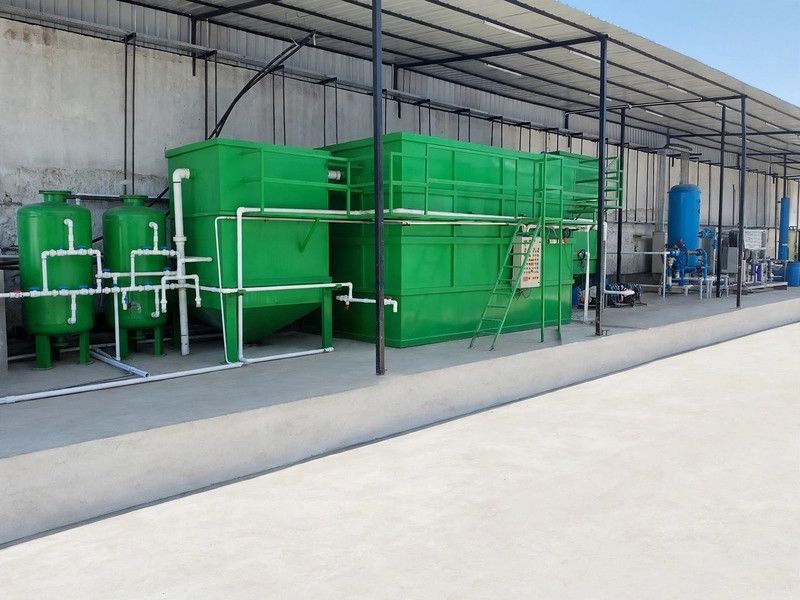
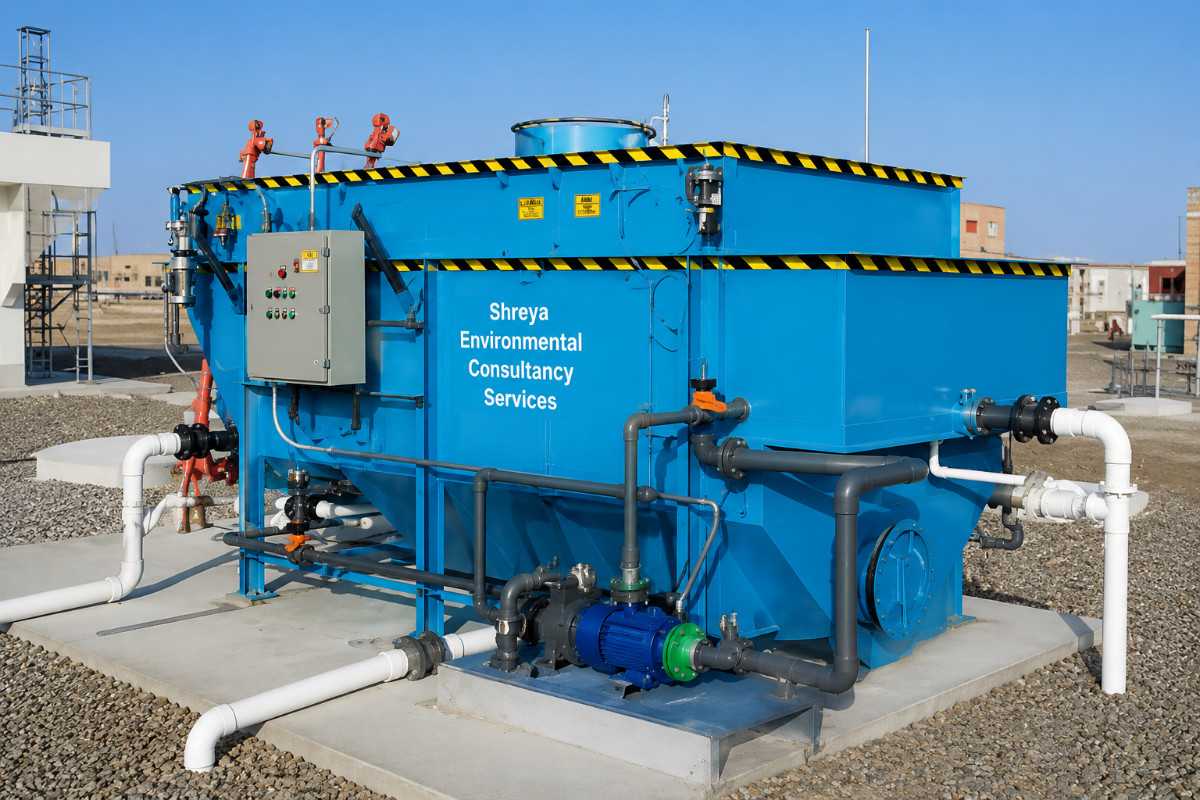
SECS provides customized ETP solutions for industries to achieve efficient wastewater management, compliance, and sustainable operations.
Pharmaceuticals
Chemicals

Food & Beverage

Textile
Dairy
Hotels & Resorts
Hospitals
Commercial Buildings
Manufacturing

Automobile

Educational Institutions
Industrial Parks
Benefits of ETP Solutions
A well-designed ETP system helps industries manage wastewater efficiently while supporting compliance, sustainability, and long-term operational performance.
Environmental Compliance
Helps industries meet wastewater discharge requirements and follow environmental regulations.
Effective Wastewater Management
Provides a structured solution for treating industrial effluent and reducing environmental impact.
Water Recovery & Reuse
Supports water conservation by enabling treated water reuse wherever applicable.
Improved Operational Efficiency
Optimized treatment systems help maintain reliable performance and reduce wastewater-related challenges.
Sustainable Industrial Operations
Promotes responsible resource management and supports long-term environmental goals.
Reduced Environmental Impact
Minimizes the harmful effects of untreated industrial wastewater on surrounding ecosystems.
20+
Years of
Experience
Why Choose SECS for ETP Solutions
SECS combines environmental engineering expertise with customized solutions to help industries achieve reliable wastewater management and sustainable operations.
Customized Engineering Solutions
Every wastewater challenge is different. We design ETP solutions based on specific process requirements, wastewater characteristics, and operational goals.
Complete Project Support
From initial assessment to installation and commissioning, SECS provides end-to-end support for successful project execution.
Quality-Focused Approach
We focus on reliable designs, suitable technologies, and efficient implementation to deliver long-term plant performance.
Industry-Focused Expertise
Our solutions are developed to meet the wastewater management needs of diverse industrial sectors.
Sustainable Water Management
We help industries adopt responsible wastewater practices while supporting environmental protection and resource conservation.
Need a Reliable ETP Solution?
Whether you need a new ETP, an existing plant upgrade, or ongoing support, our team can help develop a solution around your wastewater characteristics and operational requirements.
Discuss Your Project