
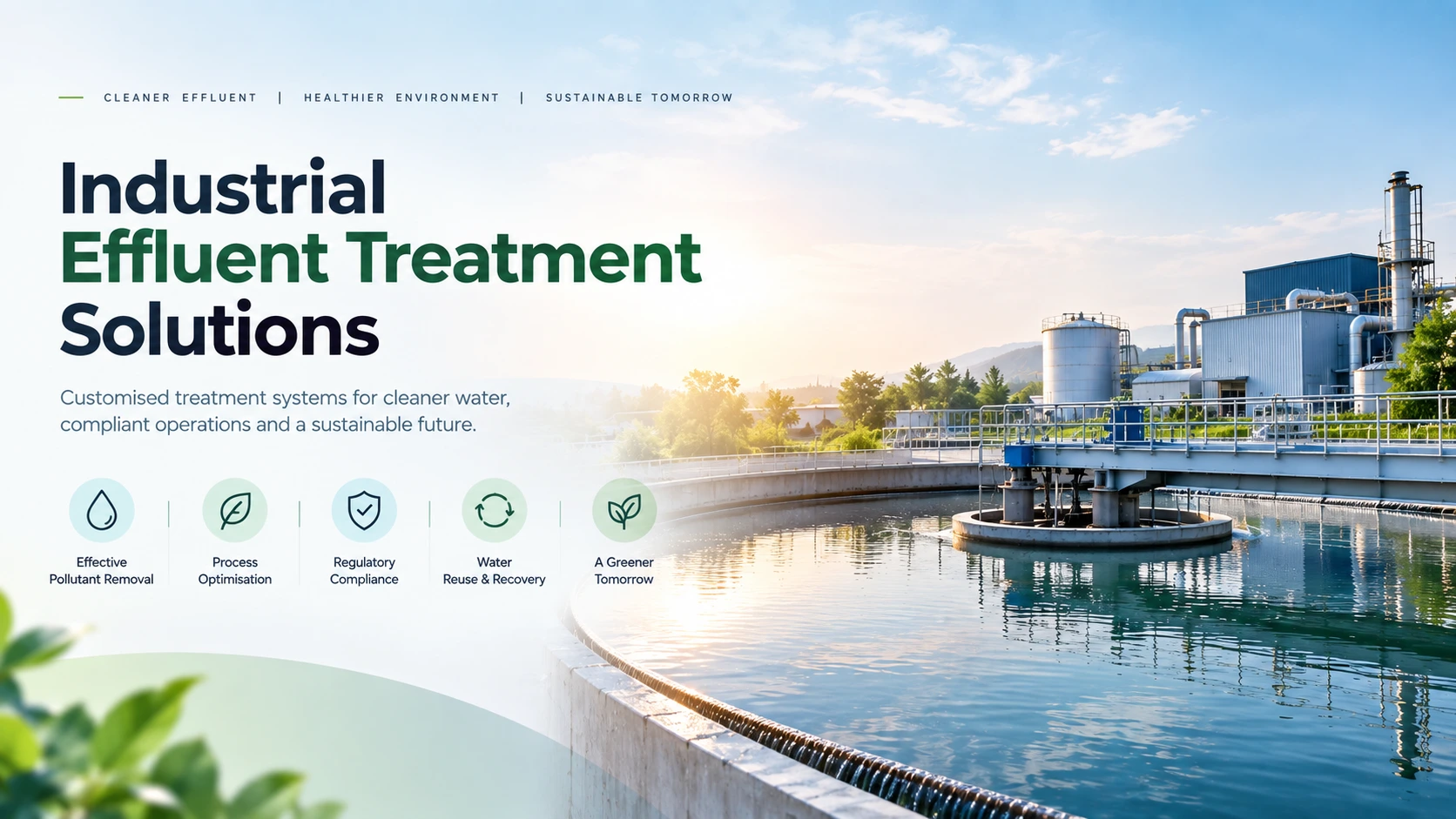
ETP in Baddi: Understanding Industrial Effluent Treatment
Industries generate wastewater as part of manufacturing, processing, cleaning, production and other operational activities. Unlike domestic sewage, industrial wastewater can contain suspended solids, organic matter, oil and grease, chemicals, colour, salts and other contaminants that depend on the type of industry and its production process. This makes appropriate treatment an important part of responsible industrial wastewater management.
An Effluent Treatment Plant (ETP) is designed to treat industrial effluent before it is discharged, further treated or considered for reuse. The treatment approach depends on the characteristics of the wastewater, the quantity generated and the quality required after treatment. For industries looking for ETP in Baddi, understanding these fundamentals helps in identifying the right treatment approach rather than treating every wastewater stream in the same way.
Baddi has a wide range of industrial activities, and wastewater characteristics can differ significantly from one facility to another. An ETP plant therefore needs to be considered in relation to the industry's process, effluent quality, flow, treatment objectives and operational requirements. Shreya Environmental Consultancy Services provides industrial wastewater treatment solutions for projects in Baddi as well as for industries across India.
From initial assessment and treatment planning to plant execution, monitoring, maintenance and operational support, an ETP project should be approached as a complete wastewater management requirement. The Effluent Treatment Plant solutions offered by Shreya are intended to address industry-specific treatment requirements through appropriately selected processes and equipment.
What Is an ETP Plant?
An ETP plant is a treatment system used to manage wastewater generated from industrial processes. Its purpose is to reduce or control pollutants present in industrial effluent so that the treated water can meet the intended quality requirements for discharge, further treatment or reuse, depending on the project.
Industrial effluent can contain different combinations of physical, chemical and biological pollutants. A pharmaceutical facility, chemical manufacturer, food-processing unit and engineering plant may all generate wastewater with very different characteristics. An ETP is therefore not simply a single machine; it is a combination of treatment stages selected according to the wastewater that needs to be treated.
The main objective is to provide controlled treatment of industrial wastewater through processes such as screening, equalisation, pH correction, clarification, biological treatment and advanced treatment where required. The exact combination depends on the nature of the effluent and the required treated-water quality.
It is also important to distinguish an ETP from a sewage treatment plant. An ETP primarily addresses industrial process wastewater, while an STP is generally designed for domestic sewage generated from sources such as toilets, bathrooms and other domestic activities. Where a facility generates both streams, the treatment requirements should be evaluated separately.
Why Is an ETP Important for Industries?
Industrial wastewater cannot always be managed in the same way as ordinary domestic wastewater because its pollutant load and composition are influenced by manufacturing processes. Without appropriate treatment and control, unsuitable industrial effluent can create environmental and operational concerns and may make responsible discharge or reuse difficult.
An ETP provides a structured method for treating wastewater before the treated stream moves to its next stage. This can help industries manage wastewater more systematically, maintain greater control over treatment performance and work towards the applicable discharge or reuse requirements for their facility.
The importance of an ETP is particularly clear when an industry has variable wastewater characteristics. Production changes, cleaning cycles, raw materials and process conditions can all influence effluent quality. A properly planned treatment system takes these factors into consideration during design and operation.
For industries in Baddi and other industrial locations, wastewater treatment should therefore be considered as part of the overall production and environmental management system rather than as an isolated utility. Appropriate treatment can support responsible wastewater handling while also creating opportunities for further treatment and water recovery where technically suitable.
Which Industries Need an ETP?
The need for an ETP depends on whether an industrial facility generates process wastewater that requires treatment. Different industries produce different types and quantities of effluent, so the treatment system must be selected according to the actual wastewater characteristics rather than only the industry name.
Pharmaceutical Industries
Pharmaceutical manufacturing can generate wastewater from production processes, equipment cleaning and associated operations. The wastewater may contain organic and chemical constituents that require an appropriately designed treatment process. An ETP for pharmaceutical industry applications therefore needs to consider the specific manufacturing process and effluent characteristics.
Chemical Industries
Chemical manufacturing can produce wastewater with varying pH, dissolved substances, organic compounds and other process-specific contaminants. Treatment may involve physical and chemical processes along with additional treatment stages depending on the composition of the effluent.
Food and Beverage Industries
Food and beverage processing can generate wastewater containing organic matter, suspended solids, fats, oils and other biodegradable or process-related pollutants. The treatment approach is selected according to production activities, wastewater volume and required treated-water quality.
Textile and Dyeing Industries
Textile and dyeing processes can produce wastewater containing colour, suspended matter, chemicals and other contaminants. Depending on the process, treatment may require combinations of physical, chemical and biological treatment followed by additional polishing where necessary.
Manufacturing and Engineering Industries
Manufacturing and engineering facilities may generate wastewater from process operations, washing, surface treatment, equipment cleaning or other activities. The characteristics can vary considerably, making wastewater assessment an important part of ETP planning.
Paper, Processing and Other Industrial Facilities
Paper manufacturing, processing units and other industrial facilities can also generate wastewater requiring controlled treatment. In every case, the ETP should be based on the actual effluent characteristics, flow and treatment objectives rather than relying on a standard plant configuration.
What Does an ETP Remove From Industrial Wastewater?
An ETP can be designed to reduce different types of pollutants, but the exact contaminants treated depend on the industry and the selected treatment process. Not every ETP is designed to remove every pollutant, which is why wastewater analysis and process selection are important before finalising the plant.
- Suspended solids: Physical particles and suspended matter can be separated through screening, settling, clarification and filtration processes where appropriate.
- Organic pollutants: Biodegradable organic matter can be reduced through suitable biological treatment processes when the wastewater characteristics support biological treatment.
- Oil and grease: Wastewater containing oil and grease may require dedicated separation or removal stages before subsequent treatment.
- pH-related contaminants: Neutralisation and chemical dosing systems can be used to bring wastewater conditions into a suitable range for subsequent treatment stages.
- Colour and chemical constituents: Certain industrial effluents may require chemical or advanced treatment processes to address colour and specific dissolved or process-related contaminants.
- Dissolved solids and salts: Where dissolved contaminants are a significant concern, additional treatment such as membrane-based processes may be considered depending on the required water quality.
- Industry-specific pollutants: Pharmaceutical, chemical, textile, food and other industries may have specific contaminants that require treatment processes selected around their individual wastewater characteristics.
The treatment objective should always be defined before deciding which technologies are required. A properly planned ETP and STP technologies approach considers the wastewater source, pollutant load, flow variation and final treatment requirement rather than applying the same process to every industrial facility.
How Does an ETP Plant Work?
An ETP generally works through a sequence of treatment stages, with each stage performing a specific function. The overall process can range from relatively simple physical treatment to combinations of chemical, biological, filtration and advanced treatment depending on the industrial wastewater.
1. Collection and Equalisation
Industrial effluent is collected and may be directed to an equalisation tank. Equalisation helps manage variations in flow and wastewater characteristics before the effluent enters subsequent treatment stages. This can provide more consistent conditions for downstream treatment.
2. Preliminary Treatment
Preliminary treatment may include screening and other physical separation processes to remove larger solids and materials that could interfere with downstream equipment. Oil and grease separation may also be included where required by the wastewater characteristics.
3. Primary Treatment
Primary treatment commonly focuses on physical and chemical separation of suspended and settleable matter. Depending on the effluent, processes such as pH correction, coagulation, flocculation and clarification may be used to improve the separation of contaminants.
4. Biological Treatment
Where biodegradable organic matter is present and biological treatment is suitable, an aeration or other biological treatment stage can be used. Microorganisms help break down biodegradable pollutants under controlled operating conditions.
5. Secondary and Advanced Treatment
Further clarification, filtration or other polishing processes may be included after biological treatment. Where the required water quality demands additional removal of dissolved contaminants or other specific pollutants, advanced treatment technologies can be integrated into the treatment train.
6. Sludge Management and Treated Water Handling
Solid material separated during treatment produces sludge that requires appropriate collection, handling and disposal or further management. The treated water is then directed towards its intended destination, which may be compliant discharge, further treatment or reuse depending on the project requirements.
The actual ETP process flow should therefore be developed around the wastewater characteristics and treatment objective. A detailed technical assessment is essential before selecting equipment, treatment stages and operating parameters for an industrial ETP plant.
What Are the Main Components of an ETP?
An ETP plant consists of different tanks, equipment and treatment systems that work together to manage industrial effluent. The exact configuration varies according to the wastewater characteristics, treatment capacity, process requirements and quality of treated water required by the industry.
- Collection and equalisation tanks: These receive industrial effluent and help manage variations in wastewater flow and characteristics before further treatment.
- Screening systems: Screens can remove larger suspended materials and protect downstream pumps and treatment equipment from unwanted solids.
- Oil and grease removal systems: Where industrial wastewater contains oil or grease, suitable separation equipment can be incorporated into the treatment process.
- Neutralisation systems: pH correction may be required when the incoming effluent is too acidic or alkaline for subsequent treatment stages.
- Clarifiers: Clarification systems help separate suspended solids and chemically formed flocs from the wastewater.
- Biological treatment systems: Where biological treatment is appropriate, aeration and associated equipment provide controlled conditions for reducing biodegradable organic matter.
- Filtration and polishing systems: Filters and other tertiary treatment equipment can provide additional removal of suspended matter or specific contaminants where required.
- Sludge handling systems: Treatment generates sludge that needs to be collected, dewatered or otherwise managed according to the characteristics of the waste.
- Pumps and chemical dosing systems: Pumps, dosing equipment and associated piping help move wastewater and introduce treatment chemicals where required.
- Instrumentation and controls: Monitoring instruments and control systems can help operators observe important process conditions and maintain more consistent plant operation.
These components should not be selected independently. Their capacity and configuration need to work together as part of the complete treatment system. The water and wastewater treatment solutions approach is useful when an industrial facility needs to consider ETP treatment alongside other water management requirements.
Benefits of Installing an ETP Plant
An ETP provides industries with a structured system for managing process wastewater. Its benefits extend beyond simply treating wastewater because a properly planned system can support environmental management, operational control and opportunities for water recovery where suitable.
- Better industrial wastewater management: An ETP provides a defined treatment route for wastewater generated during industrial operations.
- Controlled pollutant reduction: Treatment processes can be selected to address the specific pollutants present in the industrial effluent.
- Support for responsible discharge: Appropriate treatment helps industries work towards the applicable quality requirements for their intended discharge route.
- Potential for water reuse: Where treated-water quality and process requirements allow, additional treatment can make reuse possible for selected applications.
- Improved process control: Monitoring flow, pH, chemical dosing and other operating parameters can provide better control over treatment performance.
- Resource efficiency: Water recovery and reuse can reduce dependence on fresh water for suitable industrial applications when technically and economically feasible.
- Better environmental management: A planned ETP forms an important part of an industry's broader approach to wastewater and environmental management.
- Operational planning: Regular monitoring and maintenance can help identify treatment issues before they develop into larger operational problems.
These benefits depend on correct design, suitable operation and regular maintenance. An ETP should not be viewed as a one-time installation where performance is expected to remain unchanged without monitoring or operational attention.
ETP and Environmental Compliance
Environmental compliance is an important consideration when planning industrial wastewater treatment. The applicable requirements can depend on factors such as the industry, wastewater characteristics, quantity of effluent generated, discharge route and the intended use of treated water.
An ETP should therefore be designed around the required treated-water quality rather than simply selecting equipment based on wastewater volume. Sampling and analysis of the incoming effluent can help identify the pollutants that need to be addressed and the treatment stages that may be appropriate.
Regular monitoring is also important after the plant is commissioned. Changes in production, raw materials, wastewater flow and process conditions can influence the performance of an ETP. Monitoring helps identify such changes and allows operational adjustments to be considered when necessary.
Environmental requirements can also involve documentation, monitoring and other environmental management activities beyond the physical treatment plant. This is where environmental consultancy services can complement an ETP project by helping industries evaluate their broader environmental management requirements.
The objective should be to develop a treatment system that is technically appropriate for the facility and operated in accordance with the applicable requirements. Specific regulatory conditions should always be evaluated for the individual industrial project rather than assumed to be identical across all industries or locations.
Why ETP Design Depends on the Industry
There is no single ETP design that is suitable for every industrial facility. Two factories can have similar production capacities but generate wastewater with very different pollutant characteristics because of differences in raw materials, manufacturing processes, cleaning practices and production cycles.
For this reason, an ETP project should begin with an understanding of the wastewater rather than starting with a fixed list of equipment. Important design considerations include:
- Industry and manufacturing process: The production activity influences the type of pollutants likely to be present in the wastewater.
- Wastewater flow rate: Average and peak flow conditions need to be considered when determining treatment capacity.
- Effluent characteristics: Parameters such as pH, suspended solids, organic load, oil and grease, dissolved substances and industry-specific contaminants can influence process selection.
- Pollutant load: The concentration and quantity of pollutants help determine the treatment requirements and equipment sizing.
- Treated-water objective: The required quality after treatment depends on whether the water is intended for discharge, reuse or further treatment.
- Available space: The physical layout of the facility can influence the arrangement and selection of treatment units.
- Sludge management: The quantity and characteristics of sludge generated during treatment should be considered as part of the complete system.
- Automation and monitoring: The level of instrumentation and control can be selected according to the plant's operational requirements.
- Future production changes: Potential changes in production or wastewater generation should be considered where relevant to avoid an unsuitable treatment capacity.
This industry-specific approach is particularly important for industrial ETP plants because treatment performance depends on the relationship between the wastewater and the selected treatment process. A plant designed without adequate wastewater information may face operational difficulties even when the individual equipment items are technically suitable.
ETP in Baddi: Why Local Industrial Wastewater Treatment Matters
For industries operating in Baddi, wastewater treatment needs to be considered in relation to the specific manufacturing activities carried out at each facility. Different industrial units can generate different wastewater streams, which means that an ETP in Baddi should be planned around the actual effluent generated by the individual plant.
Industrial wastewater treatment in Baddi may involve a combination of physical, chemical, biological and advanced treatment processes depending on the nature of the wastewater. Pharmaceutical, chemical, food-processing, manufacturing and other industrial activities can have different treatment requirements, making site-specific assessment important before finalising the treatment system.
The location of the plant is only one part of the planning process. The more important considerations are the wastewater source, flow, pollutant load, required treated-water quality and the intended discharge or reuse route. These factors determine whether a conventional ETP configuration is sufficient or whether additional treatment stages are required.
For a new facility, upgrading an existing plant or addressing changing production requirements, an ETP project may involve assessment, process selection, engineering, installation, commissioning and ongoing operational support. Shreya provides turnkey project execution for water and wastewater treatment requirements, helping industries approach the project as an integrated system rather than as separate equipment purchases.
For industries looking specifically for an Effluent Treatment Plant in Baddi, the right approach is to first understand the wastewater and treatment objective. Once those requirements are established, the appropriate process configuration and equipment can be evaluated for the facility.
Can Treated ETP Water Be Reused?
Treated ETP water can potentially be reused for selected applications when the treated-water quality is suitable for the intended use. Reuse is not automatically possible after every ETP because different applications require different water-quality characteristics, and additional treatment may be necessary.
For example, where dissolved solids or other contaminants remain after conventional treatment, membrane-based processes may be considered. Reverse Osmosis systems can be integrated into a treatment train when the wastewater and reuse objective make this approach appropriate.
The reuse objective should be defined during the planning stage because it influences the required treatment level. Water intended for a particular industrial process may require a different quality from water used for another utility application.
For facilities seeking higher levels of water recovery and reduced liquid discharge, a Zero Liquid Discharge solution may be considered where technically and economically appropriate. ZLD combines different treatment and concentration stages to recover water while managing the remaining concentrated waste stream.
Industries interested in higher water recovery can also explore the detailed discussion of ZLD in Baddi and industrial water recovery to understand how advanced wastewater treatment can form part of a broader water management strategy.
The key point is that water reuse should be based on actual water-quality requirements. An ETP can provide the initial treatment foundation, while additional processes may be incorporated when the intended reuse application requires a higher level of treatment.
ETP vs STP: What Is the Difference?
ETP and STP are both wastewater treatment systems, but they are designed for different wastewater sources. An ETP primarily treats industrial effluent generated from manufacturing and process activities, while an STP treats domestic sewage generated from sources such as toilets, bathrooms and other domestic facilities.
- ETP: Designed around industrial process wastewater and the specific pollutants associated with manufacturing activities.
- STP: Designed primarily for domestic sewage containing biodegradable organic matter, suspended solids and other sewage-related pollutants.
- ETP treatment design: Often depends heavily on the raw materials, production process, chemicals and industrial operations generating the effluent.
- STP treatment design: Generally focuses on treatment characteristics associated with domestic sewage.
- Industrial facility requirement: A facility may require an ETP for its process effluent and an STP for domestic sewage, depending on its wastewater streams and site arrangement.
Understanding this difference is important because an STP should not automatically be considered a substitute for an ETP when industrial process wastewater is involved. Where domestic sewage treatment is also required, a dedicated Sewage Treatment Plant can be considered alongside the industrial wastewater treatment system.
The correct treatment approach ultimately depends on the source and characteristics of the wastewater. Separating industrial effluent and domestic sewage at the planning stage can help ensure that each wastewater stream receives the treatment it actually requires.
ETP Operation and Maintenance
Installing an ETP is only one part of effective industrial wastewater management. The plant also needs regular operation, monitoring and maintenance to keep the treatment process working as intended. Changes in wastewater characteristics, equipment condition, chemical dosing and operating parameters can all influence treatment performance.
Routine operation may include monitoring important process parameters, checking pumps and mechanical equipment, managing chemical dosing, inspecting tanks and pipelines, handling sludge and observing the quality of treated water. The exact operating requirements depend on the treatment process and the characteristics of the industrial effluent.
Preventive maintenance is also important because equipment such as pumps, blowers, mixers, dosing systems, filters and other mechanical components operates continuously or regularly. Identifying wear, abnormal operation or process changes at an early stage can help industries plan corrective action and maintain more consistent plant operation.
Industries that require ongoing support can consider dedicated ETP operation and maintenance services. O&M support can be particularly useful when an industry wants to maintain systematic monitoring and operational attention after the treatment plant has been commissioned.
What Should Industries Consider Before Installing an ETP?
Before investing in an ETP plant, industries should understand their wastewater generation and define what the treatment system is expected to achieve. A technically suitable ETP starts with accurate information about the wastewater rather than simply selecting a standard plant capacity.
- Understand the wastewater source: Identify which manufacturing processes, cleaning activities and other operations generate the industrial effluent.
- Measure wastewater flow: Average flow, peak flow and variations during production should be considered when planning treatment capacity.
- Analyse effluent characteristics: Testing helps identify important physical, chemical and biological characteristics that influence treatment selection.
- Identify the treatment objective: Determine whether the treated water is intended for discharge, reuse, further treatment or another defined purpose.
- Consider the industry process: Raw materials, chemicals, production methods and cleaning practices can significantly influence the ETP design.
- Evaluate available space: Tank dimensions, equipment placement, pipelines, access and maintenance requirements should be considered during layout planning.
- Plan sludge management: Sludge generated during treatment needs an appropriate handling and management approach.
- Consider monitoring and automation: The required level of instrumentation and control should match the plant's operational needs.
- Plan for operation and maintenance: The long-term operating requirements, manpower, consumables, maintenance and monitoring should be considered before commissioning.
- Allow for relevant future changes: Where production expansion or process changes are expected, their potential effect on wastewater generation should be considered during planning.
These considerations help create a more complete picture of the project before the treatment system is finalised. They can also reduce the risk of selecting a plant configuration that does not match the actual wastewater generated by the facility.
How Shreya Environmental Consultancy Services Can Help With ETP Projects
Planning an ETP requires more than selecting tanks and equipment. The treatment system needs to relate to the industry's wastewater characteristics, production process, treatment objective and ongoing operational requirements. Shreya Environmental Consultancy Services works with industries on industrial wastewater treatment requirements in Baddi and across India.
With 20+ years of experience in the environmental and wastewater treatment field, Shreya works across a range of water and wastewater requirements. For an ETP project, this can include understanding the wastewater requirement, evaluating suitable treatment approaches, supporting plant planning and execution, and providing operational or maintenance support where required.
The company's broader treatment capabilities include Effluent Treatment Plant solutions as well as Sewage Treatment Plants, Water Treatment Plants, Reverse Osmosis systems and Zero Liquid Discharge solutions. This broader capability can be useful when an industrial facility has more than one water or wastewater requirement and needs these systems to work together as part of its overall water management approach.
Shreya also provides operation and maintenance services for ongoing plant requirements and turnkey project execution where a project requires coordinated implementation. Environmental assessment and related requirements can also be supported through the company's environmental consultancy services.
For industries searching for an ETP plant in Baddi, the starting point should be the wastewater itself. By understanding the process, flow, pollutant characteristics and intended treatment outcome, the treatment system can be planned around the actual requirement instead of relying on a generic configuration.
Frequently Asked Questions About ETP Plants
What is an ETP plant?
An ETP, or Effluent Treatment Plant, is a wastewater treatment system designed to treat industrial effluent generated from manufacturing and process activities. Its treatment stages are selected according to the characteristics of the wastewater and the required quality of the treated water.
Why do industries need an ETP?
Industries may generate wastewater containing suspended solids, organic matter, chemicals, oil and grease, salts and other process-specific pollutants. An ETP provides a controlled treatment system to reduce relevant pollutants and manage the wastewater appropriately before discharge, further treatment or reuse.
What does an ETP remove?
The contaminants removed depend on the industry and treatment configuration. An appropriately designed ETP may address suspended solids, biodegradable organic matter, oil and grease, pH-related conditions, colour and specific chemical or dissolved contaminants through suitable treatment processes.
Which industries require an ETP?
Industries that generate process wastewater may require an ETP, including pharmaceutical, chemical, food and beverage, textile, dyeing, manufacturing, engineering, paper and other processing industries. The actual requirement depends on the wastewater generated by the facility and its intended discharge or reuse route.
How does an ETP plant work?
An ETP generally combines multiple treatment stages such as collection, equalisation, preliminary treatment, pH correction, primary treatment, biological treatment, clarification, filtration or advanced treatment where required. The exact process flow is selected according to the wastewater characteristics and treatment objective.
What is the difference between an ETP and an STP?
An ETP is primarily designed for industrial process wastewater, while an STP is designed mainly for domestic sewage. Industrial and domestic wastewater have different characteristics, so they may require separate treatment systems when both are generated at a facility.
Can treated ETP water be reused?
Yes, treated ETP water can potentially be reused for suitable applications when its quality meets the requirements of the intended use. Additional treatment, such as filtration or Reverse Osmosis, may be required depending on the contaminants remaining in the treated water and the desired reuse quality.
How is an ETP designed for an industry?
ETP design depends on factors such as wastewater flow, pollutant characteristics, production process, industry type, treatment objective, available space, sludge generation and operational requirements. Wastewater assessment and analysis are important for selecting an appropriate treatment configuration.
Where can industries get an ETP in Baddi?
Industries looking for an ETP in Baddi can work with a wastewater treatment provider that can assess their industrial effluent and develop a treatment approach around the actual requirement. Shreya Environmental Consultancy Services provides ETP and related wastewater treatment solutions for industries in Baddi and across India.
Conclusion
An ETP in Baddi is not simply a collection of treatment tanks or equipment. It is a planned system for managing industrial effluent according to the wastewater generated by a particular manufacturing process. The right treatment configuration depends on factors such as flow, pollutant characteristics, production activities, required treated-water quality and the intended discharge or reuse route.
For industries, the importance of an ETP lies in creating a structured approach to industrial wastewater treatment. Appropriate treatment can support responsible wastewater management, help control relevant pollutants and, where technically suitable, create opportunities for treated-water reuse and higher water recovery.
For a new ETP project, plant upgrade or ongoing wastewater treatment requirement, Shreya Environmental Consultancy Services can help industries evaluate their requirements and identify an appropriate treatment approach. With 20+ years of experience and capabilities covering ETP, STP, WTP, RO, ZLD, environmental consultancy, turnkey execution and O&M, Shreya supports wastewater treatment requirements in Baddi and across India.
If your industry is planning an ETP in Baddi or requires an industrial wastewater treatment solution elsewhere in India, the right starting point is an assessment of the wastewater and the treatment objective. You can explore Shreya's Effluent Treatment Plant solutions or connect with the team to discuss the requirements of your industrial facility.